Replacing a furnace is usually framed as an equipment decision: brand, efficiency, stages, price. The decision that actually determines comfort and operating cost happens earlier, and it is about the house. A blower door test is the cheapest way to make that decision with data instead of instinct.
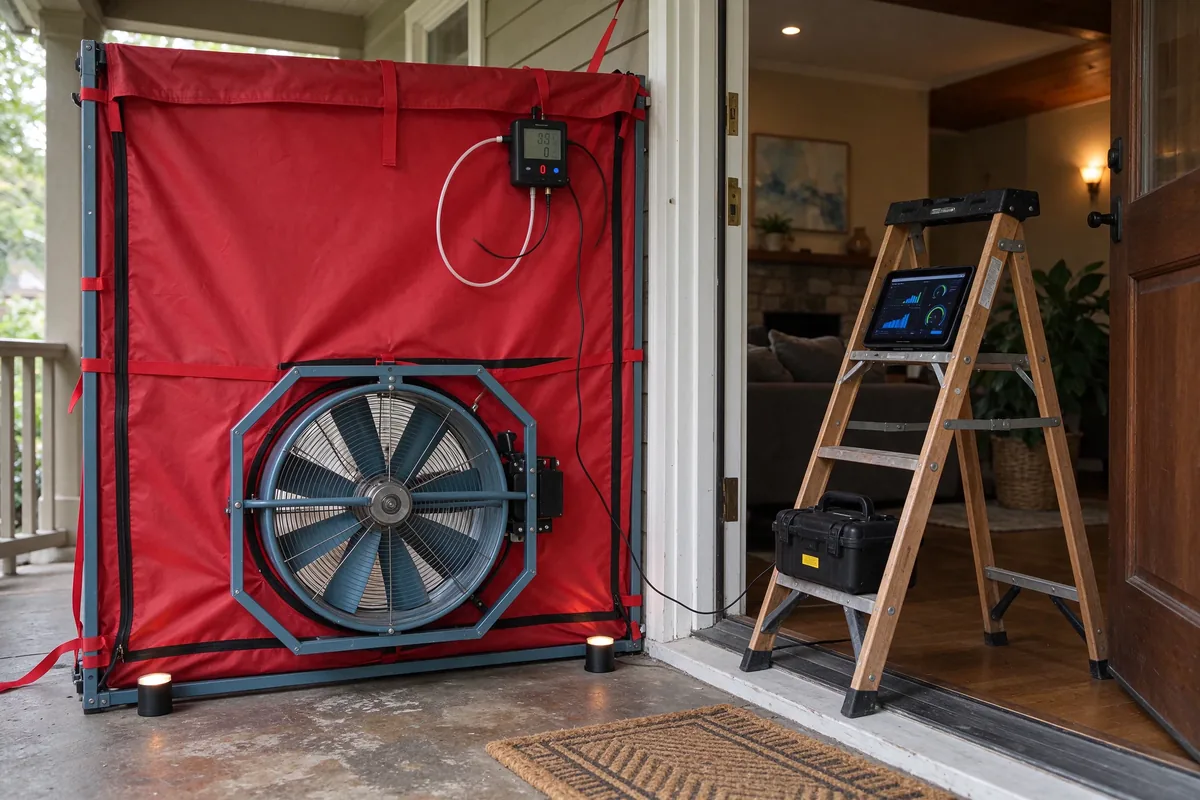
The test itself is simple. A calibrated fan seals into an exterior doorway, depressurizes the house to a standard pressure difference, and measures how much air leaks in through every gap in the envelope. The result is expressed in cubic feet per minute at fifty pascals, and it tells you how leaky the building is before you choose equipment to heat it.
What the number actually means
A tight modern house might test near two air changes per hour at fifty pascals. A 1920s Denver bungalow with original windows, no wall insulation and a vented crawlspace can test four to six times that. The difference is not academic: it is the difference between a furnace sized for a real load and one sized for a guess.
Leakage also has a location. The test tells you how much air is escaping; a walkthrough with a thermal camera or a smoke pencil tells you where. In older Denver homes the usual suspects are rim joists, attic hatches, recessed lights, dryer vents, chimney chases and the top plates of exterior walls. Sealing those is unglamorous work with a measurable payoff.
Why this changes equipment sizing
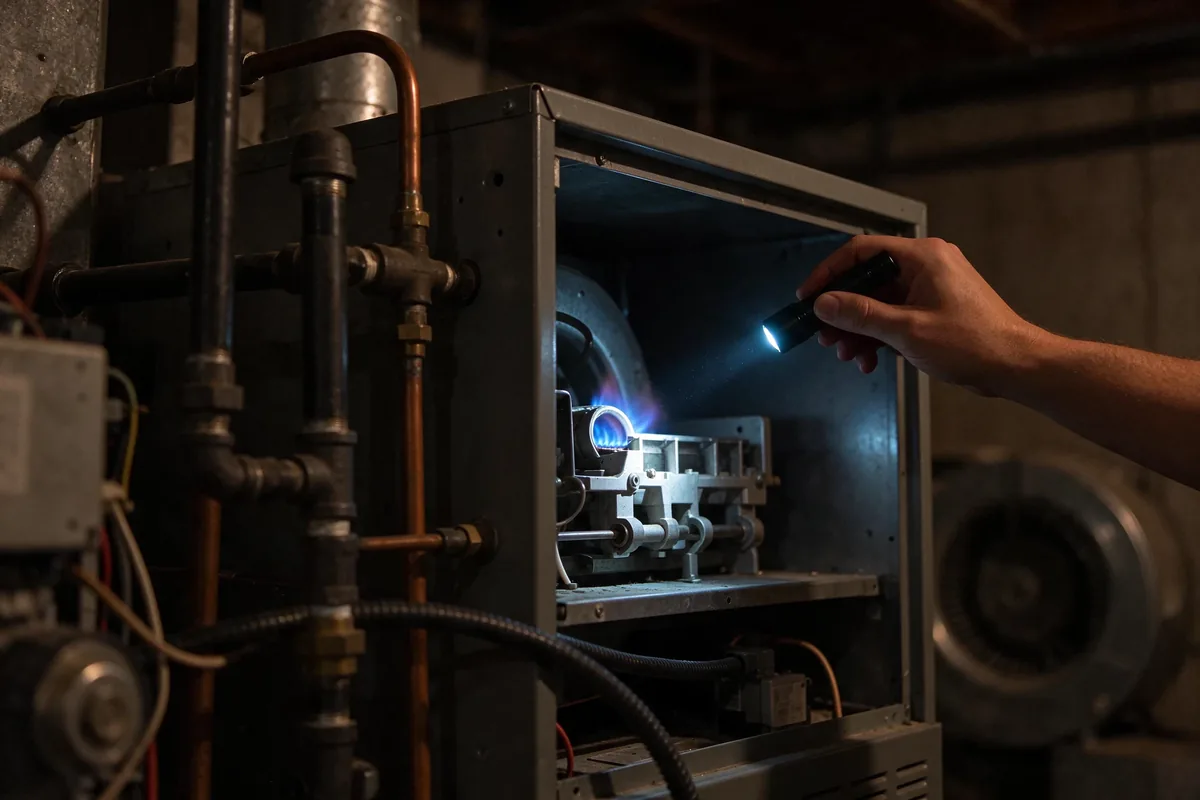
Manual J load calculations assume an envelope. If the assumption is wrong, the equipment is wrong. Contractors who size by square footage or by matching the old furnace are implicitly assuming the house performs the way it did when the old unit was installed — which, after thirty years of air sealing, insulation upgrades and window replacements, it probably does not.
An oversized furnace short-cycles. It heats the house quickly, satisfies the thermostat and shuts down before the temperature has evened out, which is why some rooms stay cold while the equipment runs less than it should. A properly sized two-stage or variable-speed unit runs longer at lower output, which is both more comfortable and more efficient.
Duct leakage is the other half
A blower door test measures the envelope. A duct leakage test measures the distribution system, and in older homes it is often the larger number. Ducts running through a vented attic or crawlspace can lose a meaningful share of the air they carry before it reaches a register, and they can also pull dirty air in through joints.
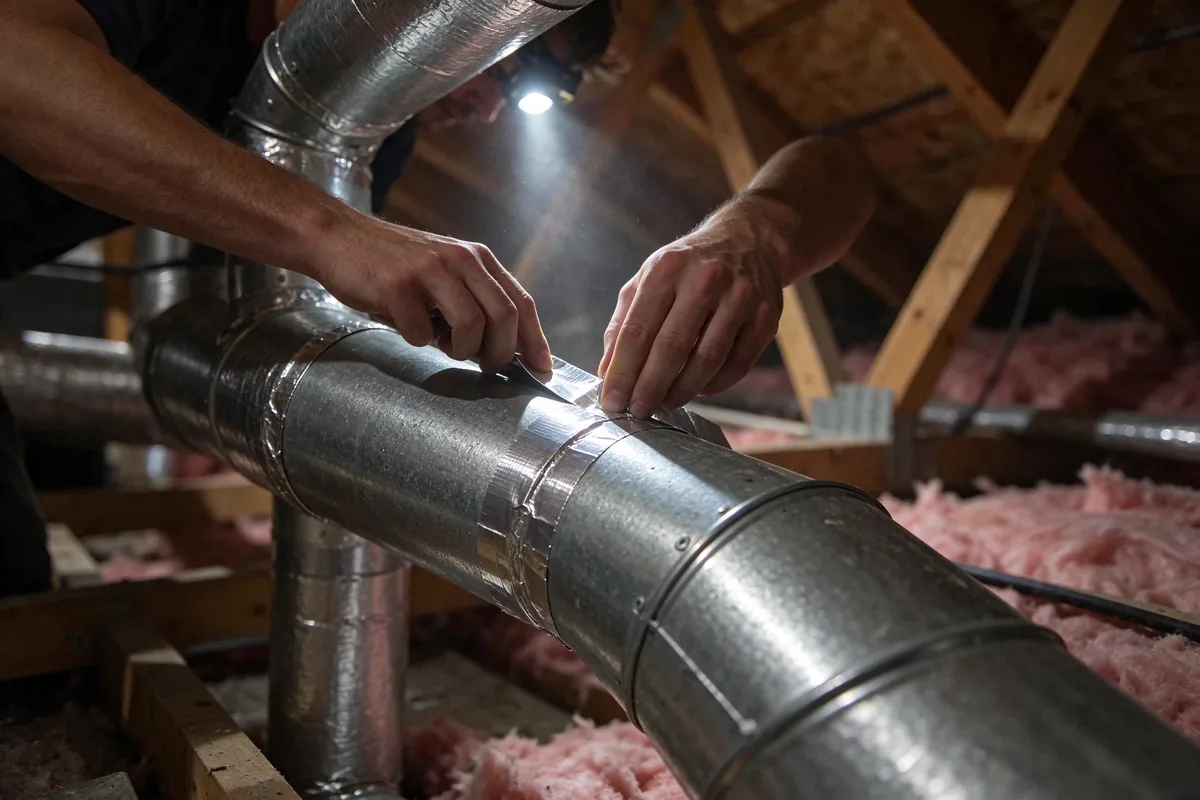
Sealing ducts and sealing the envelope are complementary. Doing one without the other often produces a house that is tighter but still uneven, because the distribution system is still losing air in the wrong places. When we plan a replacement, both tests are part of the assessment rather than an upsell.
The order of operations that saves money
- Test the envelope and the ducts before choosing equipment.
- Air seal the accessible leakage paths — attic, rim joist, penetrations.
- Seal duct joints and insulate runs in unconditioned space.
- Recalculate the load with the improved envelope.
- Size and select equipment against the new number, then commission it.
This sequence sometimes produces an uncomfortable conclusion: the existing furnace is fine, and the money is better spent on the envelope. We would rather tell a homeowner that than sell a replacement that solves a problem the house created. The test costs a visit; the wrong equipment costs a decade of discomfort and higher bills.
What to ask for
Ask for the blower door result in writing, along with the load calculation it feeds. A number without the calculation is trivia; the calculation without the test is an assumption. Together they explain why a given furnace was chosen, which is the only way to judge whether the recommendation fits the house.
What the test does not measure
A blower door measures leakage, not insulation value, window performance or duct leakage. A house can be reasonably tight and still have cold rooms because the walls are uninsulated or the ducts are losing air in the attic. The test is one measurement in a set, and treating it as the whole answer leads to the same guesswork in a different costume.
It also measures the house on the day of the test, at one pressure difference. Wind, stack effect and open doors change the picture hour to hour. The number is a useful benchmark for comparing improvements, not a precise description of every condition the house will experience.